Tuesday, January 25, 2011

Cancer

        Look, I realize that cancer is bad, and that no one likes to hear about it. But it's just like bacteria: if you know it's bad, you want to learn about it to prevent it, right? Right. Good. So, unlike bacteria, all cancer is bad. It can kill. Most of the times, it does. It's the second leading cause of death in the United States, after cardiovascular disease. Cancer is a word that strikes fear into everyones heart...


        As you can see, this will not be pleasant. Never fear, though, there are simple steps to keep yourself from getting cancer. And, if you do happen to get cancer, make sure to catch it early. Here:
  • Eat plenty of vegetables.
  • Get checkups at the doctor.
  • Exercise.
  • No smoking, and no drugs.
       
         Some of this may be hard, because I know I do not like cooked vegetables. I can handle them raw, but cooked? No way. Can't change it. My taste buds think it stinks. See, me, I don't wanna smoke or do drugs. I hate exercise, but be proud of me: I joined the cross country team. It ended, though, a long time ago, so now I'm back to my old lazy reading self. But learning about cancer... well, it really rained on my parade. So now I gotta exercise. Dad's rules.
        Now, look. Many people, and you may know some, have cancer. If you do know someone, please, be nice. Act positive, because when you're positive, it spreads. Kinda like an infection. If you're positive, they're positive. Do not act as if you're talking to a person who can't understand you, because most of them can. They won't appreciate it.
       Cancer is cause by DNA (deoxyribonucleic acid) damage. If your body can't fix the DNA, the DNA will keep splitting. The broken DNA will be copied over and over. It will not stop. Eventually this can cause a tumor:
       There are two types: benign and malignant. A benign tumour is harmless. 'Benign' means cannot infiltrate the bloodstream.  This cannot be said for the malignant tumour. This tumour can enter the bloodstream and travel to other part of the body. This is called metastasis. If cancer cells travel to other parts of your body, and they multiply, it becomes harder to fight. That's why you wanna catch it early.
 
        If your family has a history of cancer, the more likely you will get it; it increases your chances. You need to work on not getting cancer, and if you happen to, catch it before it spreads. We don't need more people dying because of this disease. Work hard, and eat right.

        There are many different types of cancer. Blood cancer, lung cancer, brain cancer, throat cancer, breast cancer, and many many more. Every cancer is dangerous. Most cancers are deadly. Cancer needs to be treated with caution. It is not something to be made fun of, even if you didn't mean to. You need to treat it with respect, because it can kill you in the link of an eye. Maybe when you grow up, you'll be a doctor, or even research new ways to treat cancer. Help, and you can be a hero.
        Hope this helps somone. Even if it helps one person, just one, it will be worth all the time I put into it. I really hope someone reads this, and then helps someone else. Please kindly go to SuperSara's, youngro-jalenguy's, and Kevin's blog if you wanna know more. I put the links below.
        And finally, here's videos for all those fighting cancer:
         

Thursday, January 6, 2011

Mitosis

        Mitosis is very interesting. Why? Because it helps you grow! It duplicates the cell in a process, and this process has stages. Very interesting. Now, for all those people out there that are short (I feel you, I'm one of them), I'm pretty sure you're wondering why you're short. Maybe your cells aren't duplicating properly? Or that the process of mitosis in your body just works plain slow? Maybe. Maybe not. I don't really know, but I'll find out later.
        Now, one thing you need to remember is that mitosis is not the only type of cell division. It's one of the types, sure, but not the only one. The other one is called meiosis. And no, that's not the same thing. It's quite different. S o if you go out saying that mitosis is the only type of cell division, expect a look that says, What the heck are you talking about? Don't say I didn't warn you.
        Here's a little music video about mitosis.

        Awesome video, huh? And catchy, too. Prophase, Prometaphase, Metaphase, Anaphase, and Telophase. Cool, huh? Yeah. So, you know the order, you probably know what they do, now, but what kind of teacher would I be if I let a mere music video teach you guys. Not a very good one. First, I would get a bad grade, and second, that will never get you past your test. Sure, it'll help. But imagine if you suddenly answered every question in rhyme, and singing this song under your breath. Not good. 
        So, I'm going to explain this one by one. First, prophase. Now, as you should know, it is the first step of mitosis. The chromatingenetic material made up of DNAcondenses, which makes the chromosomes (DNA and protein that are found in cells) shorten. The nucleolus breaks down, and the centrosomes, which are a small region of cytoplasm, move apart and begin to build a mitotic spindle.
        Next up, prometaphase. The nuclear membrane breaks down, which allows the spindle to invade the nuclear region. Then the spindle fibers take the chromosomes.  
        Third, metaphase. The spindle fibers pull the
chromosomes  to the central  plate, where they line up.
        Almost done. Anaphase is next. The spindle fibers shorten, and the opposite poles of the cell start to move apart, so that each chromatid of the chromosome is dragged to the opposite of each cell.
        Last step is telophase. The spindle fibers break down. The chromatin also begins to uncoil. Nuclear membranes form around the chromosomes, and the nucleoli begin to reappear.
        Hope this helps you. Remember: Prophase, prometaphase, metaphase, anaphase, and telophase. "P" "P" M" A" T". It's very interesting. Interesting, and it helps us grow. Cool, huh? If you want websites, look down. If you want to learn more, as always, go to SuperSara's and youngro-jalenguy's blog. I put the links below. I just figured out how to do it. Now you can actually go to their websites! I hope you like them. And... we have a new kid. I completely forgot to put him in here. Say hello to Kevin! Have a good day, and until next time!
Cool interactive Cell Game

Sunday, January 2, 2011

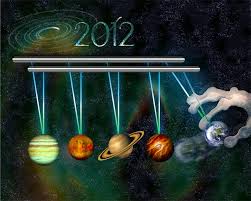
2012

        2012 does not exist. It's not going to happen. I mean, come on. These people have predicted the world is going to end so many times, that it's almost as if they want the world to end. It's stupid, and now people are getting all paranoid. In the year 2000, they 'predicted' that all technology was going to fail--and then the world was going to end. Well, let me tell you: the only reason the world will end is because of how we're treating it. So, technically, we're bringing this all down on ourselves.
        Anyway, maybe people would believe the world was going to end. Maybe. Maybe if they'd have been more organized in the date and time. I met one person who says its going to end December 12, 2012. Another says it going to end December 21, 2012. And yet another say December 25, 2012. One says the time will be 12:12 A.M. And the other two say 11:11 A.M. They say the Maya predicted the end of the world. The truth is, that's when their calender. And are we seriously going to believe a tribe that disappeared without a trace? Now, I've got nothing against the Mayans. I think they're interesting. They had interesting ways of doing things. But people belive them becuase they predicted that white bearded men would discover America the exact year they did. Well, let me tell you, it was black bearded men.

        Yes, yes, it's a small mistake. But think about it. If they made a mistake on that, what's to say they didn't make a mistake on predicting 2012? What if the world doesn't end? If it doesn't end in 2012, then, let me tell you, it will only be a matter of time until they predict that the world will end another year. They'll just keep predicting until it happens. And by that time, no one will believe them, so no one will get ready.
        You know how people judge people by their color, or their styles, or their beliefs? Well, maybe people don't like me for not believing in 2012 (even though that would be a really stupid reason for not liking me), but that's really too bad. We are who we are, and who I am is me. And there's nothing anyone can say or do to change that (except for me). I'm me, just like SuperSara is SuperSara, and like youngro-jalenguy is youngro-jalenguy. Maybe my opinion will change about 2012, but I seriously doubt it. Anyway, do you believe 2012 will happen?

Friday, December 31, 2010

HAPPY NEW YEAR!


HAPPY NEW YEAR, EVERYONE! WELCOME TO 2011! Now, let's all take a moment of silence in memory of 2010. Okay, so last year's gone. Last year, we had some good times. We went to Rock Eagle, we made it through Alice in Wonderland, a lot of new movies came out, including Harry Potter 7 part 1, The Lost Hero came out, and we went to the shuttle launch (in a manner of speaking). All great memories. All gone. But think of what we're going to do this year! We're going to go through another play, Robin Hood! The Son of Neptune will come out, the second Kane Chronicles Book is coming out, Harry Potter 7 part 2 is coming out...what more could we ask for (rhetorical question). Let's try to enjoy the New Year! (Peach drop---->)
Peach Drop

Sunday, December 12, 2010

RNA and DNA

        Now, I know what you're probably thinking: "What the heck?". Well, if you'd just be patient, maybe I'd actually tell you. Okay? Ready to listen? Great. Today, we're learning about DNA. But we also have a guest: RNA. See, RNA is a great friend of DNA, and DNA kindly asked RNA to come to here. Now that you know the story, let's get started!
         So, this song tells you all you need you know! Peace! HA! Yeah, right, like I'm going to do that. I'd get in trouble. Anyway, yes, it tells you the basic stuff. But you need to know more! You know that DNA is what makes you, you, and me, me.

Double Helix: DNA

        Okay, so DNA stands for deoxyribonucleic acid. You can think of DNA as a computer program for your body. Everyone has different DNA, except for identical twins. Identical twins are like clones of one another(I'll get to that later) because they have the exact same DNA. Almost every cell in your body has a complete set of DNA. DNA is in the center of your cell, inside the nucleus. The shape is called a double helix, kind of like a twisting ladder. They come in long strands called chromosomes.
        Normally, there are only four types of helix's: cytosine, guanine, adenine, and thymine. A DNA chain is so long, base pairs can arrange themselves in millions of different sequences. For example, adenine pairs up with thymine, and cytosine pairs up with guanine: ACGT or TGAC.

Helix
         Each section of a DNA 'codes' for a different trait. Whether it's your hair color, your eye color, the size of your ears, how tall you'll be, or even if you'll end up with certain diseases. Each one is called a gene, which your parents pass their genes down to you.

RNA

        Scientists research DNA for lots of different reasons. To name one: cloning. Identical twins are basically like twins because they're born with the same DNA. That's natural cloning. Artificial cloning is something completely different. The idea behind it is basically to copy the DNA of one animal and 'grow' a new one with the same DNA.
        Okay, let's move on to RNA. RNA stands for ribonucleic acid. It carries out the orders of the DNA to the rest of the cell. That's not its only job, though. RNA is responsible for the making of ribosomes, the structures used to assemble protein strings, carrying amino acids in and out of their ‘storage’ in the cytoplasm, and carrying a copy of the genetic information located in the DNA to ribosomes for protein creation.
        So, that's DNA and RNA. It's pretty simple stuff once you get to know it, and it's pretty much what helps us survive. Glad I could give you some information. Oh, and if any of you guys has seen a blue and white flash drive, please return it to me. Anyway, if you want to learn more, go to SuperSara's and youngro-jalenguy's blogs. Until next time!


Friday, December 3, 2010

Bacteria, NO, WAIT! It's actually pretty interesting!

        Phew. So...bacteria. Yes, yes, I know what you're probably thinking: 'Ew, bacteria. Why would I want to learn about germs?' Well, the question is why wouldn't you want to learn about germs? Because, first of all, most bacteria is good, believe it or not. And even if they weren't, you'd want to know about them to prevent them, right? Right. Glad that's settled. Now, sit back, listen, and enjoy learning about BACTERIA!
       
        So, the video tells you the basic stuff-- how germs can spread, why you should wash your hands before you eat, and never eat anything anyone else has touched, no matter how tempting it might be. But even though they looked like they could harm the woman, there's a chance that it won't make her sick. I mean, it probably will considering the man sneezed them out. But, like I said before, most bacteria are harmless. Some of them even help you.
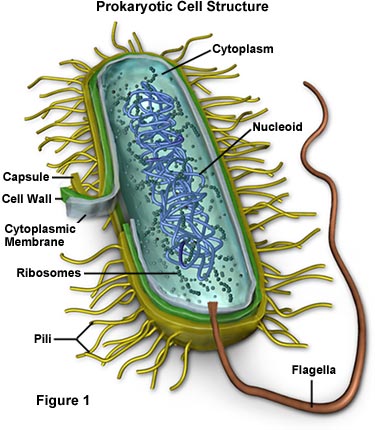
        First of all, bacteria are single celled organisms. They do not have a nucleus, but they do have a nucleoid. Some bacteria break down certain types of food to help us digest it. Some make nutrients that our bodies need. Some can even destroy some types of microorganisms that can make us sick. Less than one percent of bacteria actually harm us.
        FUN FACT: Nine out of every ten of the cells in your body are bacterial cells, which means that most of your cells aren't your own.
        Okay, now is time for my actual assignment: describe six parts of a typical bacterial cell and give their functions. That other stuff was just stuff you needed to know. Now, please try to enjoy yourselves, okay?           
        Good. Now, a bacterial cell is pretty simple. Here-
  • Nucleoid: The DNA in the bacterial cell is usually confined in the nucleoid. It isn't bound by a membrane, but it is still visibly distinct.
  • Ribosomes: Ribosomes make protein for the bacterial cell. A good way to remember this is to think of ribs. The word 'ribs' is in the word 'ribosome', is it not. And we all know that ribs give protein, so really, thay fit together.
  • Cell Wall: It maintains the shape of a bacterial cell.
  • Plasma Membrane: Responsible for the transport of ions, nutrients, and waste across the membrane.
  • Capsule: Protects the bacterial cell.
  • Flagella: It helps the bacterial cell move. Bacterial cells without flagella cannot move. It almost acts a 'motor'.
  • Pilus: Tiny and hairlike, pilus is made of proyein and allow bacteria to attach to other cells. 
        That's it for today. Hope you enjoyed, and, as always, if you want to know more, where do you go? That's right. To youro-jalen guy's blog and to SuperSara's blog. I'm 98% positive they have awesome information(never be completley positive).  Peace, my home dawgs.
        ANOTHER FUN FACT: Did you know that there's more bacteria on you than there are people in the world?

Monday, November 29, 2010

Plant and Animal Cells

        Oh my God. I'm so scared. We're locked in a room. HELP! We're at Shreiner Academy. SOS! In a room. The only locked room. Call the SWAT team. Break down the door and get us out. Our teachers are crazy! Our animal cells are in danger. The plant cells aren't. Lucky plant cells.
        Oh, false alarm. Well, not really. They did take us, but it was for good reasons. Anyway, we're supposed to be learning about plant and animal cells. They may look different, but they're the same in some ways. And they're different in some ways. Let's start with the similarities first.
        Plant and animal cells are both eukaryotic. This means that that they both have proper nucleus. They both have mitochondria, a nucleus, Golgi apparatus, cytoplasm, endoplasmic reticulum(smooth and rough), ribosomes, and so on. They are both living, obviously, and they both need food.
        Now, the differences. Plant cells have a cell wall as well as a cell membrane while animal cells have only a cell membrane. Both animal cells and plant cells need food, yes, but the difference is that plant cells can make their own food with photosynthesis. Plant cells have something called chloroplast which is what conducts photosynthesis. They also produce chlorophyll, which makes the plant green. The shape is different, too. A plant cell is rectangular(fixed shape), and an animal cell is round(irregular shape). Lysosomes are in animal cells, in the cytoplasm. They're not usually evident in plant cells, though.
         Ever wonder why leaves change color? Well, whether you like it or not, you're going to learn  about it. Okay, I told you about chlorophyll, right? Well, during the winter, the leaves go into hibernation, so the leaf does not produce chlorophyll or photosynthesis. It lives off of the food it has stored. Since the leaf does not produce chlorophyll, the leaf does not turn green. Leaves survive during the spring and summer, and dies during the fall and winter. Which means they have very short lives. Poor leaves.
        Well, that wraps it up for today. If you want to know more, again, simply go to youngro-jalenguy or SuperSara's blogs. Well, until next time!
P.S. Here's a picture of an animal cell: