Wednesday, May 18, 2011

Owls

        Hiya! Whassup? Well, I hope you're well, because this is probably gonna be my last post. Well, until next school year, at least. I'll probably have a goodbye blog, but I don't see why, 'casue then you wouldn't see this one. Anyway, today is all about owls. Screech owls, snowy owls, hue owls, you name it. You probably need to know what they eat, especially if you have a pet. Their personalities differ from owl to owl, so that won't be in here. You need to know when they feed and wake, and when they sleep. Now, I know what you're probably thinking, 'All owls sleep during the day, and wake at night, duh!' Well, there are some owls that do the opposite. You know, sleep during the night and hunt during the day. And, no, owls have nothing to do with Owl City. Now, if you're done chatting, we can get started.
       FUN FACT: Owls cannot turn their head completely around. That's superstition.  
        Owls are amazing, even though you'll catch me saying that about all animals. They have a unique way of avoiding people, though that's not the only reason they have their sleeping patterns. So, again, most owls sleep during the day, and hunt at night. But, like I said before, some owls sleep during the night, and feed during the day. Hang on, lemme look them up....Well, it says here that the snowy owl is a diurnal animal...oh, and diurnal is the opposite of nocturnal, which means the snowy owl is active during the day instead of the night. Here are some more diurnal owls, including the Snowy Owl:

The Northern Hawk Owl

And Burrowing Owls
        Yeah, that's very little, but those are the only owls I could find, so don't hate *coughSuperSaracough*.  But three owls is more than you knew were diurnal, am I right? Plus, they're cute owls, and I know some of you must've seen Burrowing Owls before, because some of you must've seen the movie or read the book Hoot. That was a good movie, and an even better book. Anyway, there are way too many nocturnal owls to name all of them, but I'll name a lot. After the pictures, we'll talk about the owls' diet. Here:
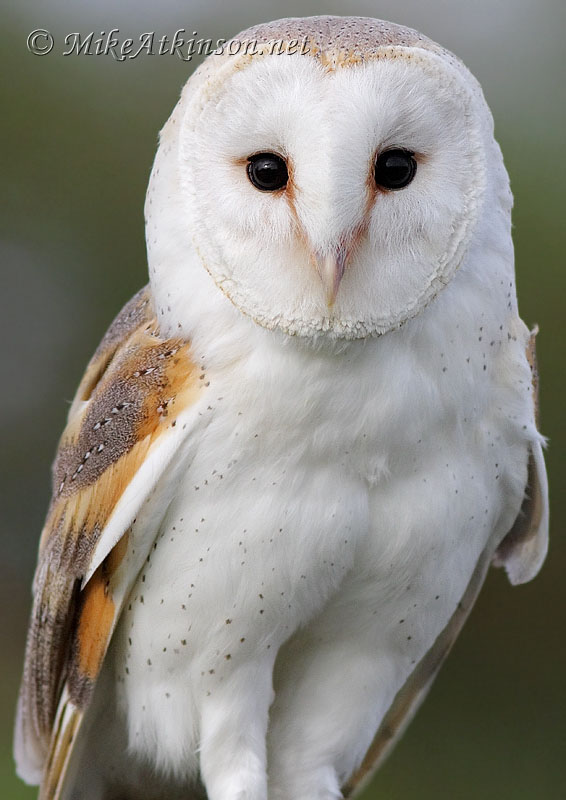
Barn Owl
  
Great Horned Owl

Scops Owl
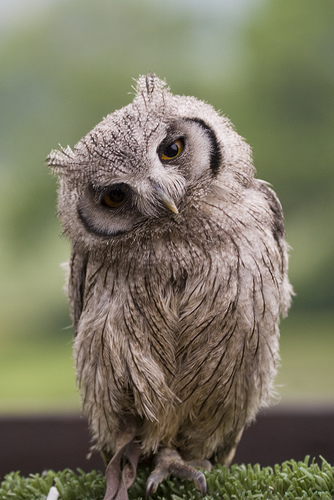
Screech Owl

Eagle Owl
Fish Owl

Wood Owl
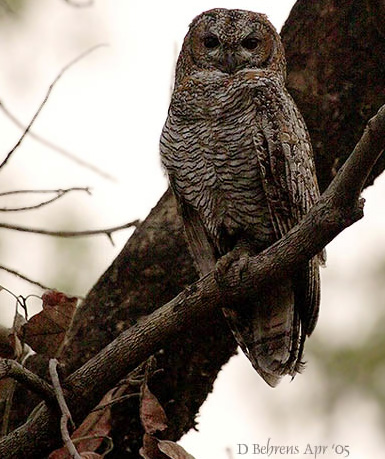
Tawny Owl

Chaco Owl
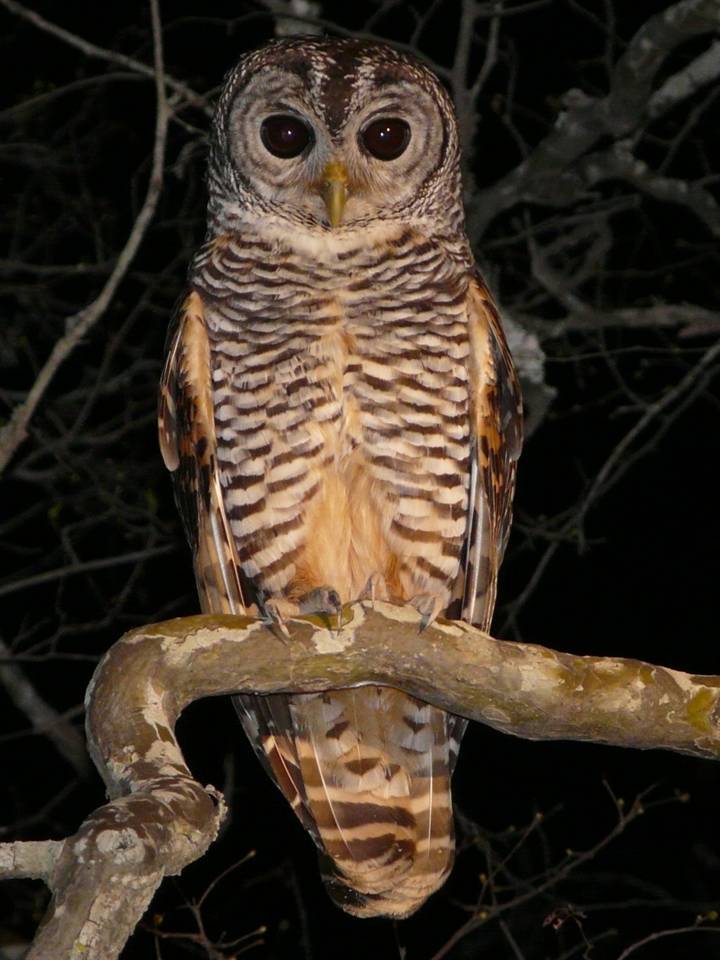
Ural Owl

Great Gray Owl

Mottled Owl
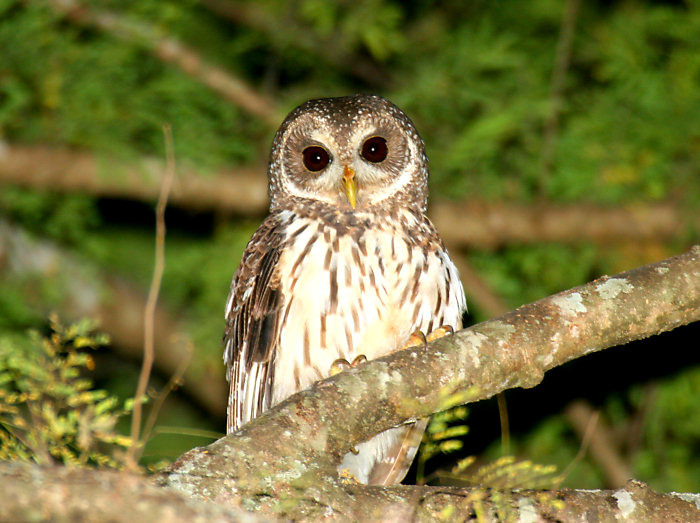
Black-banded Owl

Rufous Owl

Maned Owl

Crested Owl

Band-bellied Owl

Pygmy Owl

Owlet

Elf Owl
Elf Owl (Micrathene whitneyi)

Long-whiskered Owl

Boreal Owl

Stygian Owl

Striped Owl

Long-eared Owl

Marsh Owl

The Little Owl

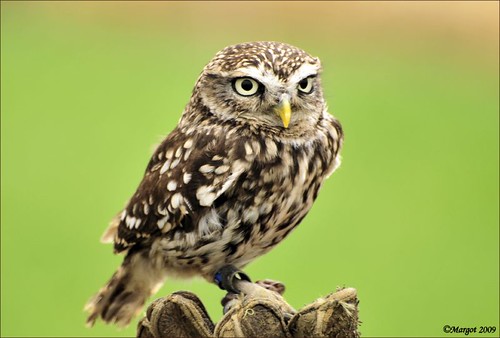
and Fearful Owl
Fearful Owl (Nesasio solomonensis)

        So that's some nocturnal owls. Not all, mind you, just some. Owls eat rodents (mice, rats, squirells, rabbits, ect.), bats, insects, snakes, snails, crab, fish, and voles. If owls get really hungry, they'll turn to eating other owls. Some can eat foxes, herons, domestic cats, domestic dogs, and there's a report of a Siberian Hawk Owl getting a ¾ grown wolf, and believe me, that's a big wolf. Well, not a big big wolf, but a big enough wolf. That must've been a big owl, especially if it carried off the carcas.
        So, don't let your pet dog or cat out, it's really dangerous. Even if you don't see an owl in your neighborhood (why would you? Most are nocturnal), don't let them out. And, though I think this goes without saying, don't let your hamster or other rodent or even your snake outside at night. Or during the day. Owls can be hungry enough to hunt during the day, you know.
        So, that's it. Hoped you learned something! I know I did. Then again, I always learn something while doing a blog. I'm afraid this is my last blog post of the school year, though if I'm bored during the summer I'll do a blog on dogs and other animals like tigers or dolphins or wolves. Don't forget to check out my snake blog below, and I'll put a link up for an owl website!
hachi

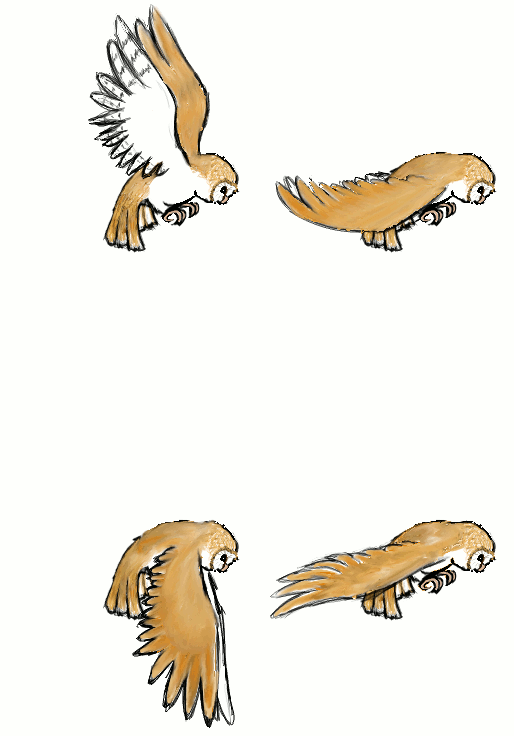
snowy owl animation 

Here's a funny little song I stumbled upon. It kinda has something to do with owls, mainly that you don't want them as enemys or something like that.
 

Sunday, May 15, 2011

Snakes—friend or foe?

        Snakes are...interesting. They have a bad rep. I mean, in most movies and stories, the snakes are the bad guys. But why? Did it perhaps start in Adam in Eve? Or is it because of venomous snakes? Because, like bacteria, most snakes are just plain friendly. Well, not friendly, but they won't bite unless they have a reason to, and if they do bite, most aren't venomous, so they won't hurt you. Snakes are actually pretty cute and interesting. One just must learn to look past the fangs and the the stories, and examine.
       Snakes have scales, which helps the snake retain moisture. Some people think that snakes have slimy skin. That's not true. Snake skin is actually pretty soft. Not like puppy soft, but smooth. Snakes can shed their skin. They have to, because that's how they grow.
        Snakes have different ways of getting their food. But all of them use their tongue to smell. The Jacobson gland on the roof of their mouth allows this. It also allows them to taste. Now, some snakes squeeze their prey to death, like a python. Some use venom, like an anaconda. And some sneak up and kill. All of these are very good ways to get their food. Snakes eat mice, rats, birds, bunnies, insects, crustaceans, bird eggs, frogs, lizards, and other snakes. Some can even eat crocodiles! Hee hee...watch out!
        Venomous snakes usually have a triangular head. Some venomous snakes include: a copperhead
a sidewinder,
a cottonmouth,
a King Cobra,

a Deathadder

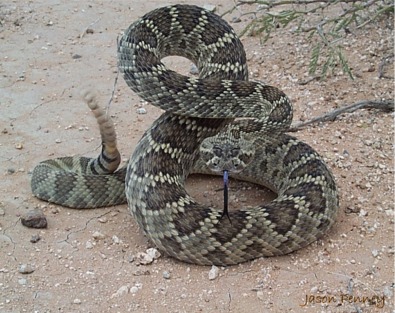
a Mojave rattlesnake

a desert horned viper

a Puff Adder

a Tigersnake

a Egyptian cobra

a forest cobra

a Ringhal

Russell's Viper

a black-necked cobra

a common taipan

and a saw-scaled viper

        Yeah, I know. That's a lot. But you need to know. Because even though most venomous snakes have triangular shaped head, by the time you get close enough to look, you'd probably be bitten. Not because they like biting, but because they see you as a threat. So...CRUNCH! And you'd need to go to a hospital. Um, not fun. You know what? I'll give you some advice, though I don't listen to it: If you see a snake, avoid it. Now, I don't follow that, so if you don't, I'm not gonna say anything, though you may get an earful from an adult. My ears'll never be the same. But the snake was cool! I don't know which one, but it was cute. We had to let him go, though, 'cause my mom threatened to throw the snake out, and me. So...yeah. I got to keep a lizard for a couple days, though, but that's another story.
        Some non-venomous snakes include:
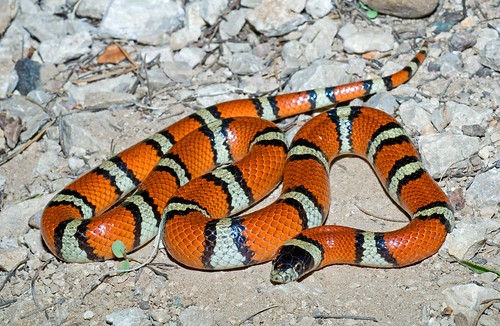
New Mexico Milk Snake

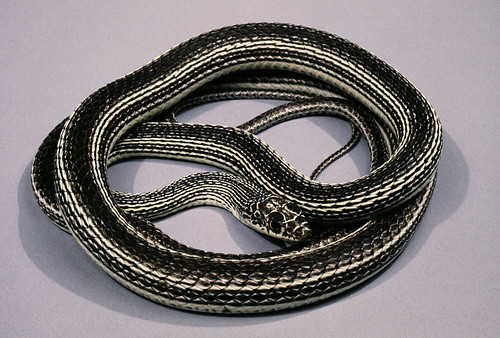
Desert Striped Whipsnake

Checkered Garter Snake

Eastern Garder Snake

Desert King Snake

Gray-Banded Kingsnake

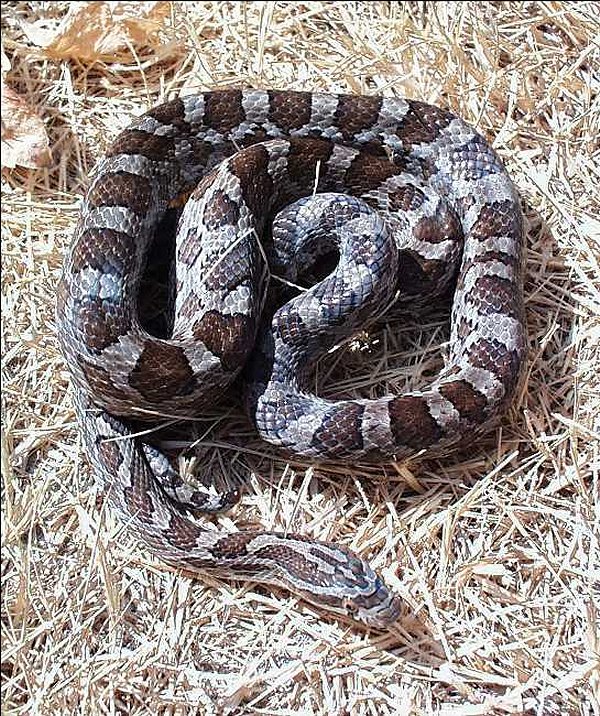
Great Plains Rat Snake

Ground Snake

Kansas Glossy Snake

Texas Longnosed Snake

Texas Patchnose Snake
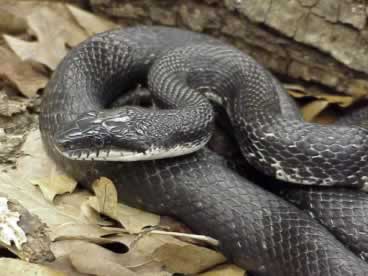
and a Black Rat Snake

        So, those are some common snakes. Some people think you don't need to know common snakes, but if you mistaken a common snake with a venomous snake, then blame the people who thought you didn't need to know what a non-venomous snake looks like. But they're cute, aren't they? Just don't watch them it. It'll turn your stomach, and make you feel really bad for whatever it's eating.
        Now, please do me a favor. If you see a snake anywhere, don't kill it. It's cruel, and you're taking a life. Even if the snake's in your house. Just let it go, because it's most likely a garden snake, which you can see below. Well, that's it for today! Please, if you want to learn more, there's a link below. My classamate's aren't talking about the same things as me, but you can go to theirs, too. SuperSara is talking about rainbows(I gotta say, it fits), youngro-jalenguy is talking about energy, Katie's talking about bunnies, I think. She may have changed it. And Kevin's is a surprise. Goodbye! -Live Long, Stay Strong

Gardener Snake


Green Garden Snake


Water Snake
animated cobra
moving snake in tree

Thursday, April 28, 2011

Who figured genetics out? That is to say, who dove deeper?

        Hiya, people. I hope I find you well. Today we're going to learn about people who weren't afraid to dive deeper than anyone into the mysteries of genetics.  The lucky contestants who studied genetics are: Francis Crick, James Watson, Severo Ochoa, and Barbara McClintock. I have to admit, they've got pretty cool names. But that's not why they're important. Far from it (though you may believe otherwise). Now, if you're interested, let's get started.
        Francis Harry Compton Crick was born June 8th, 1986. James Dewey Watson was born on April 6th, 1928.

James Watson (left) and Francis Crick (right)

Cartoon of Francis Crick and James Watson
  
         They were partners, and they discovered the DNA (deoxyribonucleic acid) double-helix.


Double-Helix

         That's how they contributed. They discovered that thing up there, and without them, we wouldn't know what it looks like! That double-helix appeared in the scientific paper on April, 1953, where James and Francis showed the structure of the DNA helix, the molecule that passes genetics from one generation to the next. Francis Crick died on July 28th, 2004, of cancer. James Watson is still living today.
        FUN FACT: The first time Francis Crick and James Watson tried to build the DNA structure, it didn't work.
        FUN FACT: Francis Crick has a brother, who is a doctor in New Zealand. He was going to get his Ph.D, but  the war interrupted him. 
        FUN FACT: James Watson wrote several papers on the construction of the virus. He likes bird watching, and he has never married.
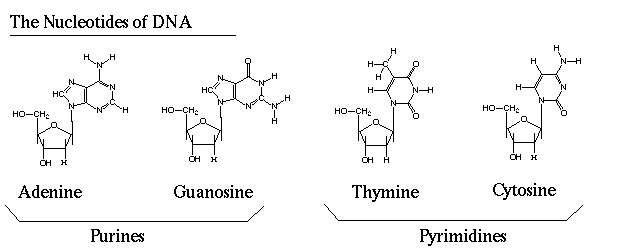
        Next up, Severo Ochoa. He's got a cool name. Severo Ochoa was born on September 24th, 1905. He's a bit older than Francis and James, but it's fine. Severo Ochoa contributed to genetics with the genetic code. The genetic code is 64 triplets of nucleotides. Nucleotides form the basic structural units of nucleic acids, like DNA.  


The Nucleotides of DNA


        Anyway, the triplets are called codons. In 1931, Severo married Carmen Garcia Cobian. He died November 1st, 1993.
        FUN FACT: Seveo Ochoa was a Hispanic scientist, and the youngest of seven children.
 
Severo Ochoa

        Last but not least (because she's a girl), Barbara McClintock. Now, in my opinion, she's the best, but not because she's a girl or anything, and that makes her superior, but because...well, she's a girl, and that makes her superior. It makes her superior, not only because she's a girl, but because science was thought to be beyond woman's abilities, even though woman had a lot to do with some of it, like the discoverer of radioactivity Barbara McClintock was born June 6th, 1902. Her contribution to genetics  was the genetic transposition. She also helped us a little in understanding chromosome structure.

Young Barbara McClintock

Old Barbara McClintock

        Um, if you wanna know, genetic transposition is 'the ability of genes to change positions on chromosomes, in which a transposable element is removed from one site and inserted into a second site in the DNA'. I got that definition at http://www.medterms.com/. Anyway, Barbara McClintock died on September 2nd, 1992.
        FUN FACT: Barbara McClintock began her interest in genetics when she was an undergraduate. 
        So, out of the four people we talked about today, one is still alive. That's kinda sad. I hope you enjoyed, and I ask you guys for no haters...on any of my classmate's bogs. Okay? Good. Speaking of my classmate's blogs, if you wanna know/learn more, please go to their blogs. As always, the links are below. Stay tuned!
SuperSara's Blog
youngro-jalenguy's blog
Katie's Blog
Kevin's Blog


Friday, April 8, 2011

How do Genetic Mutations happen? Do you get super powers? Do you get to be a villan?

        Hiya! How are you? How's your brain? How's your stomach? Good? I hope so. Because you're about to take a journey, a journey to a place no other creature has gone... INTO THE WORLD OF WONDERLAND! Ha ha, just kidding. That was Alice. Speaking of Wonderland, we did that play last year, but that's another story. Well, technically, you will be going into a world of wonder, just not the Wonderland Alice went to. Yeah, yeah, let's get started.

Radioacive Spider


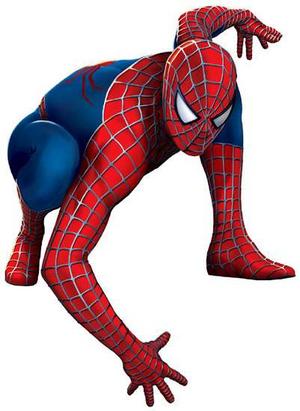
Spiderman, Spiderman, friendly
neihgborhood Spiderman!


        So, I did ask you how your brain and stomach were, right? Okay, good. That's something I'm required to do, lest I get sued...uh, not something I wanna go through. Alright, alright, today we're going to learn about *deep voice*  genetic mutations! I know how all those movies say that... I dunno... Spiderman got bit by a radioactive spider, and, because of that, his genes were altered. Now, SuperSara, don't get a big head; I don't like Spiderman, I just couldn't remember how Superman got his powers. I like the idea of Spiderman, just not the actor.
        Anyway, getting off topic. So, Spiderman got bit, he got some spider genes, and, voilĂ . Spiderman was born. But it doesn't work like that. That's just imagination and fiction. Most genetic mutations wouldn't help you like that, if you could call turning into Spidy helping. I guess it just depends on your point of view.
Eh, it looked awesome.
        Now, don't get the wrong idea. That's not what I'm paid for! Come to think of it, I'm not paid at all. Maybe I should ask.... Anyway, the point is, if you happen to come across someone who has a mutation, don't treat them like they're ebil or ugly or different.

Genetic mutated bull or cow, I can't tell

        Let's see... where was I? Ah yes. It doesn't matter if there's something wrong with your parents... you know, like diabetes or cancer. Well, technically, it does matter, but not to your body. See, the only cells of your parents that matter are the sperm and egg cell. If your parents happen to have diabetes or cancer or something, it would certainly increase your chances, but it would not be passed down to you. Now, if there is something wrong with the sperm and egg cell, then it would be bad. With a capital B-A-D.
        Mutations. The Elephant Man was a a mutation. He was mocked and made fun of. He was disformed, but he's still famous even after death. Here:

        Not pleasant, eh? Still, it doesn't give anyone the right to make fun if him, but we can't change what happened a lifetime ago. Anyway, mutations can be inherited, like I said, or they can come during a person's lifetime. Dun-dun-duuuunnnn. He he, sorry. Now, if your confuzzled, I'm sorry. I'll try to stay on topic and make this as easy as I possibly can...starting...NOW!
        Mutations that are passed from parent to offspring are called hereditary mutations or germline mutations. Germline mutations are called that because the sperm and egg cell (the only cells that can affect you) are also called germ cells. That type of mutation is present all throughout that person's lifetime, in almost every cell in the body. Eek.
        All right, here are a couple of types of mutations:
Normal gene: The dog ate the ball because it was small.
Point mutation: The dot ate the ball because it was small.
Deletion: The dog the ball because it was small.
Insertion: The fat dog ate the ball because it was small.
Frame shift: The dog ate the labl ebuceas ti saw lmal.
        As you can see, point mutation is when you replace one 'letter' with another. Deletion is pretty self-explanatory, as is insertion. But still, I'm required to teach you everything, and here it is: deletion is when you delete a 'word'. Insertion is when you add a 'word'. Frame shift is when you mix up the 'letters' in the 'word'. If any of these things happened to your genes, you can bet your buttons it'll be bad.
A Mutated Gene
        As you can so obviously see, mutations aren't very good. They can be fatal. Mutations are not something to be taken lightly. Not at all. Trust me, one mutation can change your life forever. I hope you learned something here, because I worked hard. If you wanna learn more, go to my classmate's blogs, I'll put the links below. And below the links, if you have time, is a video. Peace out, and I'll talk to you next time!