Monday, November 14, 2011

Why are the leaves FALLING?

        Ha ha, get it? Falling in the fall. You have to love corny jokes. They're just awesome. Oh, dang, where are my manners? Hi there. What's up? Today we're going to learn about the leaves changing. Oh, man, it's so cool. I mean, just the different colors and shapes, and then when they fall, sometimes they get crunchy, and then you step on them...ah, memories.
        And don't forget making leaf piles and jumping in 'em! Of course, SuperSara hasn't done this, so what we're gonna do is make on for her! Okay, so have you ever wondered why your pretty tree in your backyard that has your tire swing is looking like it's sick because its poor leaves are falling off?
        And if you think how much that tree helps you, you could get really worried. But there's no need! The tree isn't dying. The leaves are...which is better, but not by much. The leaves are dying, not because the earth is moving away from the sun, like some people think, or because the weather gets colder, like other people think, but because there's less sunlight. And, no, that still has nothing to do with the earth moving away from the sun or the cold. Stop interrupting me! It has to do with season, which we'll get into later, all right? Good.
        So why would leaves need sunlight, you ask? Well, it has something to do with a thing called photosynthesis. Plants can't go into McDonald's and ask for a double cheese burger with large fries. It doesn't happen that way with them. Plants have to make their own food, which is where photosynthesis comes in. The plants, which obviously includes leaves, take in the sunlight and, well, create food. It's a longer process than that, but that's not what we're learning about. I kind of feel bad for the plants, because they get no variety, just the same old boring food every day.
        Anyway, I think you can see where I'm going with this. If leaves need sunlight for food, and there's less sunlight during the fall and winter, can't you guess why the leaves die? They can't get enough food, in case you can't guess. It's actually pretty sad when you think about it: leaves only live for two seasons.
         
        Okay, so now you know why leaves fall off the trees. Now you have to know why leaves change colors. What some people don't know is that leaves already started out with the red, orange, and yellow that you see during the fall. But chlorophyll, which helps get energy from the sun for photosynthesis and gets rid of waste that the tree can't use, is green, and that green overpowers the other colors. And when the days get shorter, the chlorophyll sort of dies, and the other colors start to show through.
        Now it is time for the season changes! Whoop whoop! I love spring, fall, winter, and summer. But I like the cold more than the summer, and I'd like the cold to stay a bit longer! Maybe, if I find out what makes it like that, I can persuade the earth to stay a bit longer in winter, and a bit shorter during the summer. Of course, everybody's probably gonna kill me, because there's no school during summer. 
        Okay, so like I told you before, seasons don't depend on the earth moving away from the sun. While that would be easier to explain, it is not possible. You see, the the earth moving from....and I'm getting off topic. Sorry about that. So you know how a globe is never strait? How it's always tilted? Have you ever wondered why that is? Just in case you don't know, it's because that real earth is tilted. It's tilted on its axis. The axis is tilted at about 23.5 degrees. 
 
        The earth rotates on its axis, and that causes the days and nights.
        But the earth spinning on the path around the sun, the path that takes a year, or 365 earth days, to complete, is what causes the seasons. Without the tilt, however, the seasons wouldn't change, and it would probably be the same temperature all year where you live. Can you imagine that? Anyway, when the sun hits the northern hemisphere directly, the days get longer and hotter. That's summer.
        While that's happening, the sunlight is hitting the southern hemisphere at an angle, which make the days shorter and colder. That's winter.
        When the earth is on the other side of the sun, the northern hemisphere has winter, and the southern hemisphere has summer. But the tropical place are on the equator, which is the border between the northern and southern hemisphere. The poor tropics are hit by the sun for the whole year, so their seasons don't change much. Poor them. The north and south poles are different. It's winter, then summer, and there's no fall or spring. Summer there means it's always light, even during the night. Winter there means it's always dark, even during the afternoon and morning. 
       
        Here's when the seasons are supposed to start in the northern hemisphere: spring starts with the vernal equinox on March 20th, or 21st.
        Summer starts at the summer solstice, which begins on June 21st.
        Fall falls on the autumnal equinox, on September 22nd, or 23rd.
        Winter starts on the winter solstice, on December 22nd or 23rd.
        Together, of course, these create the seasons!


        Of course, the southern hemisphere would start spring when the northern hemisphere stars fall, vice versa. The southern hemisphere would start winter when the northen hemisphere starts summer, and vice versa again.


        And that's basically it for this! Yeah, I know there was a lot of pictures, and I'm sorry for that, but you can't blame me. Seasons are beautiful. Okay, so if you want to learn more, I'll put some links below, and as always, my classmates' blogs are going to be there, too. I hope you guys have a great day. I have to leaf now...haha, get it? Peace out!
Fountain of Seasons Animation: Really Cool but Not Very Informative
Science Made Simple: Why Are The Leaves Changing?
Why Leaves Change Color
How Stuff Works: Changing Seasons
When Do The Seasons Change?
SuperSara's Blog
Katie's Blog
Logan's Blog


207034_210327018986512_100000276462569_795147_1165270_n_largeNever say Goodbyecat cats kitty kitten kittens funny animal animals gif gifs animated animation animations wave waves waving hello goodbye

Monday, November 7, 2011

Let's Go To Work! The Scientific Way, Of Course

        Hiya! I'm in an oddly good mood today, so this is going to be a...how do you say....hip blog post, unless someone makes me mad, which is likely. Today we are going to learn about work! No, not the kind your parents go to, 'cause then that would be kinda weird, wouldn't it? This is a scientific kind of work, which, to me, is a bit confusing, because when you grow up with one idea of work, which is, Daddy is sorry he couldn't come to the last game of the season. He has to work, it's kind of hard for someone to put a different type of definition in your head. Technically, though, in scientific terms, if he's at a meeting or typing on a computer, he isn't working. So, poor kid was lied to.
        Isn't that heart-breaking? If my kid did that to me, which is impossible, because I don't have a kid, nor am I planning on having one, but if he did that to me, he could rule the world. Anyway, work is basically force multiplied by distance. So if a tiger picks up its baby it is 
        But if a tiger carries its kid all the way to a tree three miles away, then back again, then to the stream a mile away, is it doing work? 
Anabel helped me do this because she is awesome<-----That was Anabel.
        How is that possible, you ask? Simple. There was no force applied to the tiger cub. Force is a push or a pull. When the tiger carried its cub, the tiger didn't use a push or a pull. So if work is force multiplied by distance, and if the tiger didn't use force, then he didn't do any work. Same thing with pushing a wall. When you push on the wall as hard as you can for, say, ten, fifteen minutes, most people would say you're doing work. But you're not, because though you applied force, unlike out friend mother tiger, you did not move the wall anywhere, and you need that to do work.
        That is a very good picture to describe work. You know, or you should know, that newtons measure how much force you use, and distance is measured in meters. But what are joules? Well, it's actually really simple. Joules, as shown above, are what measure work.  So if a guy mows his lawn with fifteen newtons of force, and he covers one hundred meters, this would be the formula:

        Now time for negative and positive work. Unfortunately, this isn't going to be as easy as poitive and negative buoyancy, where positive was floating, and negative was sinking. Say two boys are playing catch. The one whose throwing the ball is doing positive work, because he is applying force to the ball, and the ball is covering distance. When the second boy stops the ball, he is doing negative work, because though he applied force, it stopped the ball, not started it. It's kind of confusing, but you'll get there in time. 
       So, that's about it! Like every time, if you wanna know more, in a more 'positive' attitude, then go to my classmate's blogs! I know Logan's URL now, so you can go to hers! Ooh, and I'll add some other websites, and maybe a video as well. Thanks for reading, even if you were force! Peace out, ma home dawgs!

Monday, October 24, 2011

Buoyancy and Density

        Wow, it's been awhile, hasn't it? Hmm....I know who did this! Who kept me from you guys! It was Newton! I knew he was ebil! Proof! Eh, it was worth a shot, yeah? So, today, obviously, we're talking about buoyancy. Now, I've gotten some complaints that I'm too negative. Well, those people need to deal with it. I'm negative at heart. After all, the life of a pessimist is the best one: either you are constantly being proven right, or you are pleasantly surprised. Okay, now, moving on. We're not only going to be learning about buoyancy, as you should know from the title. We're also going to be learning about...dun dun duuun...DENSITY! AHHH! Let's get started!
        So, buoyancy is actually pretty cool. I mean, most of you should probably know this, but if you don't, then you're going to find out! Have you ever wondered why some objects sink, and some object float, even though some of the objects that float are heavier that the objects that sink?
        Okay, so maybe that wasn't the best example. I mean, obviously a cube is going to sink. But what causes that box to sink? It's not weight, otherwise ships would sink, like the poor Titanic.

        Things float with buoyancy and density. Buoyancy is basically the water or liquid pushing up on an object or living thing, and gravity pushing down on it. For example, a penny will sink in the water because the force of gravity is stronger than the force of water trying to keep it afloat.
        On the other hand, a boat will float. Why? Because of density, which is the mass of an object per unit of volume. Or how tightly packed together an object or living being is. A boat isn't as tightly packed together as a penny, because there's air inside. If there's a lot of people on board the boat, then the boat will sink a bit lower. It there's too many people in the boat, then the boat might sink. That's why you don't get mad if you can't go on a cruise because the people say there's too many people on board, but you know they have extra rooms.
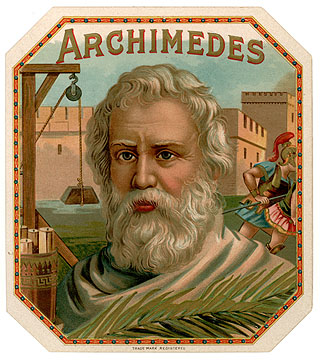
       Let me tell you a story: Archimedes was taking a bath when he noticed that when he got out of the water, there appeared to be less. But when he got back in, there appeared to be more, yet no water tumbled over the sides. Then, he got out of the bath, stark-naked, and ran through the streets, shouting, "Eureka! Eureka! I have found it!" What Archimedes had found was something called the water displacement method. There's another story based on water displacement:
animated crow Images       

A crow was very thirsty, and he flew around, looking for water. He found a pitcher half full of the liquid, and he flew down to drink some. But no matter how much he tried, the crow couldn't reach the water. After a few failed attempts to get the water, the crow had the idea to fill the water with pebbles. When he put a couple in, the water rose. So he kept putting more in, until the water was high enough to drink from.
        Though this story is supposed to encourage young kids to try even when you fail, it also has a bit of science mixed in. After all that, I suppose you can guess what water displacement is, but I'll give you the definition anyway: the water displacement method is used to determine the volume of an object by how much water it displaces, or pushes to the side. I can't really explain it any better than that.
 
        Another thing to know is negative buoyancy, positive buoyancy, and neutral buoyancy. They're easy to remember. Negative buoyancy is when something sinks, such as an anchor:
        Positive buoyancy is when something sinks:
        Neutral buoyancy is when you neither float nor sink:
Blue and yellow fish - Underwater wallpaper, background, picture, photo, image
        Notice how I put a lot of fish up there. Fish have a lot to do with buoyancy. Quite interesting, really, because they have a very unique way of actually swimming. This is just some fun facts: A lot of fish do that do their magic underwater with a swim bladder. A swim bladder is kinda like a human lung: it has an expandable sac. When a fish fills the bladder with water, it can sink to the ocean floor. When it fills it with oxygen taken from the water surrounding it with its gills, or it gets rid of the water in its bladder, the fish has a greater buoyancy, and so it can float to the top of the ocean. But for the fish to stay at a certain level, the fish has to fill its bladder equally, I guess. Really, fish are one of the best examples for buoyancy. We should give them a lot more credit.
Sorry, I thought it was funny.
        You can also test this with an experiment. It's not a difficult one; it's actually pretty simple. All you need is a large bowl of water, or a bathtub, aluminum foil, and pennies. What you can do is make a boat out of aluminum foil, and then place it into the water. After that, you can place pennies into the boat, and see how many pennies it takes to sink the boat. Remember: if your boat looks like this then it'll probably take a lot of pennies to sink it:


        But if your boat is more tightly compressed, with little air pockets inside of the boat, then I'm guessing it won't take a lot of pennies to sink it. And that is an experiment you can try that is simple and informative.
        So, that's the end of this blog. I hope you enjoyed it; I hope you learned something. I look forward to doing another blog, and I hope my next one is just as informative as this one. There are links below, and below those links are videos just in case. I'll also add a link of the story of Archimedes of Syracuse if you want to know the whole story. Or, if you don't feel like reading the story, I'll put up the video. Peace out, y'all!